Main
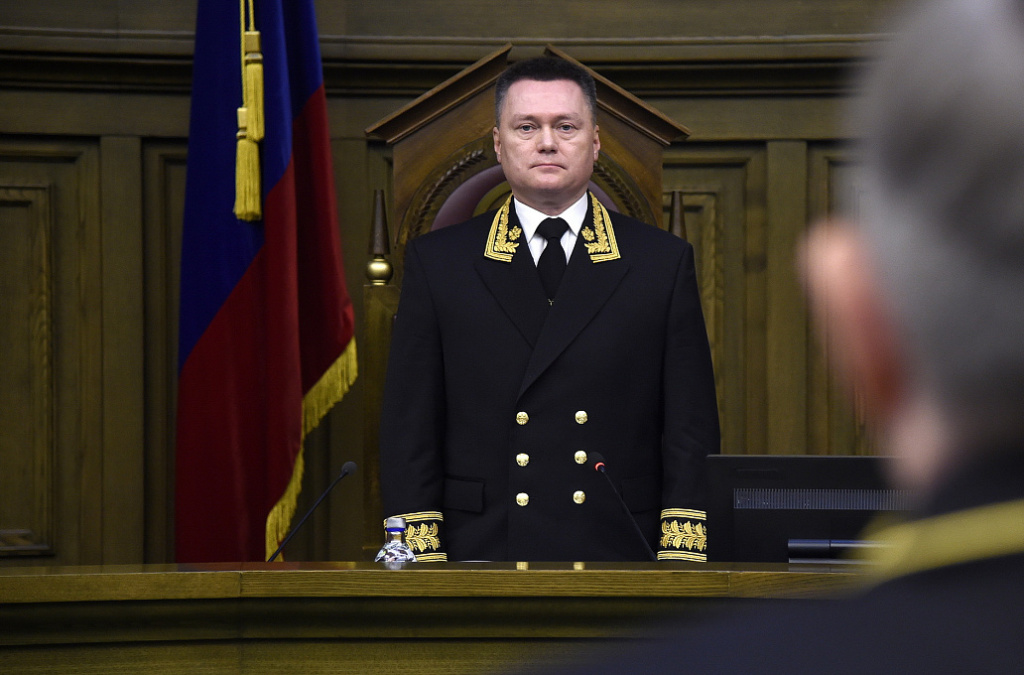
The first meeting of the Plenary Session of the Supreme Court of the Russian Federation was held under the chairmanship of Igor Krasnov
The first item on the agenda was the election of a new Secretary of the Plenary Session. By decision of the judges, this position was assumed by judge of the Supreme Court of the Russian Federation Oleg Zatelepin. The corresponding resolution was adopted on the basis of the Federal Constitutional Law «On the Supreme Court of the Russian Federation». He will also be responsible for the organizational support of the Plenary Session's work, preparation of materials for meetings, and formalization of adopted resolutions.
The second agenda item involved amendments concerning the application of legislation on military duty, military service, and the status of military personnel. The Supreme Court confirmed a number of clarifications aimed at protecting the rights of servicemen who are raising children.
According to the recommendations of the Supreme Court, when considering cases of early dismissal, courts must prioritize the interests of minors, especially if the serviceman is a sole parent. The Supreme Court emphasized the need for an individual approach to each case, including an assessment of the child's health, school attendance possibilities, and the involvement of the other parent in raising the child. Special attention was given to the rights of female servicemen. The Supreme Court affirmed the right to early dismissal in cases of partial or complete mobilization for women who are at least 22 weeks pregnant or have one or more children under the age of 16.
The resolution also contains clarifications confirming the right of servicemen with three or more children to receive housing out of turn, even after their children reach adulthood. A key requirement remains the fact of cohabitation with the children, regardless of their age.
The Plenary Session of the Supreme Court approved initiatives to establish two new courts: Vnukovo District Court in Moscow and Putinsky District Court in Grozny. The relevant draft federal laws will be submitted by the Supreme Court to the State Duma.
The establishment of Vnukovo District Court will allow for a redistribution of workload among existing courts in the southwest of the capital, where new areas are actively being developed and the number of cases is increasing. The new court will be integrated into the system of district courts in Moscow and will have its own jurisdiction defined by a separate federal law.
In the Chechen Republic, it is proposed to establish Putinsky District Court in Grozny. Its establishment aims to optimize judicial workload and enhance access to justice for residents of the region. It will become the fifth district court in Grozny, thereby expediting case processing.
The Plenary Session also approved a number of personnel decisions concerning the composition of the judicial chambers of the Supreme Court. In order to optimize the activities of the judicial chambers, several judges formerly serving in the Judicial Chamber for Economic Disputes have been transferred to other within the Supreme Court. Judges Denis Kapkaev, Galina Kireykova, Ekaterina Kornelyuk, Anatoly Pershutov, and Natalya Chuchunova will continue their work in the Judicial Chamber for Administrative Cases, while Galina Popova will join the Judicial Chamber for Civil Cases. The decision was made in accordance with the Federal Constitutional Law «On the Supreme Court of the Russian Federation».
Concluding the meeting, the Plenary Session of the Supreme Court approved changes to the composition of the Scientific-Consultative Council at the Supreme Court of the Russian Federation. According to the decision adopted, Igor Krasnov, the Chief Justice, became the Council’s Chairman, and Oleg Zatelepin — the new Secretary of the Plenary Session, judge of the Supreme Court, doctor of law — was appointed as its Academic Secretary.