Main
The Plenum of the Supreme Court of the Russian Federation, chaired by Igor Krasnov, proposed increasing the term of office of judicial bodies
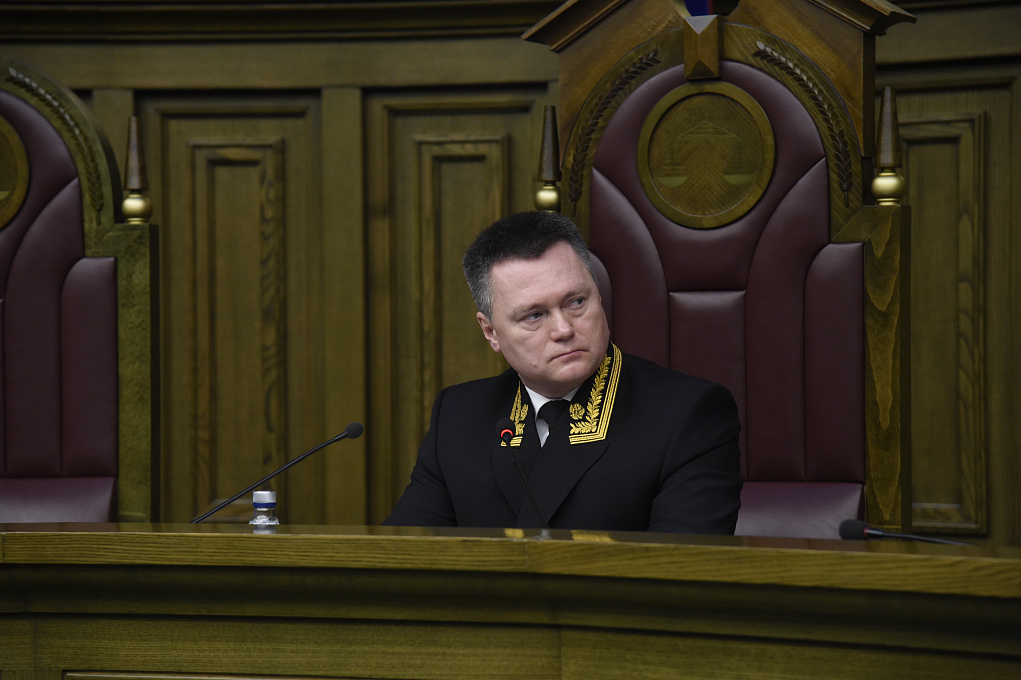
Furthermore, the draft proposes extending the term of office of the Council of Judges of the Russian Federation, the councils of judges of the constituent entities of the Russian Federation, the High Qualification Collegium of Judges of the Russian Federation, the qualification collegiums of judges of the constituent entities of the Russian Federation, the High Examination Commission, and the examination commissions of the constituent entities of the Russian Federation from four to six years.
The bill, approved by the Plenum of the Supreme Court of the Russian Federation chaired by Igor Krasnov, will be submitted to the State Duma for consideration.
Participants at the Plenum of the Supreme Court of the Russian Federation also discussed a draft resolution on the priority of satisfying the claims of controlling or affiliated persons of a debtor in bankruptcy cases.
As noted at the meeting, the resolution was prepared to clarify questions raised by the courts in determining a fair order of satisfaction for independent (bankruptcy) creditors and the authorized body of the claims of controlling persons of a debtor based on the provision of various types of loans and credits to a debtor in a financial crisis.
In particular, it was noted that in insolvency (bankruptcy) cases, priority is given to claims of social significance, such as compensation for harm to life and health.
In turn, the satisfaction of the claims of a controlling or affiliated person in legal relations with the debtor, in accordance with Federal Law No. 127 "On Insolvency (Bankruptcy)", is determined based on the nature of their obligations, the grounds for them, and the circumstances of their occurrence.
For example, the draft resolution explains that the actions of controlling and affiliated persons under their influence may be related to the restoration of lost control over the debtor and its assets. Therefore, when establishing such facts, courts, taking into account objections from parties to the bankruptcy case, should verify whether the stated relationships actually exist and also assess the need to downgrade their priority in relation to the claims of other creditors.
The draft resolution notes that one of the objectives addressed during bankruptcy proceedings is to reduce the influence of controlling and other affiliated persons on the business activities and management of the insolvent debtor's assets. Therefore, the document clarifies that the claims of such creditors, as a general rule, do not grant voting rights at a creditors' meeting unless the claims of higher-priority creditors are satisfied or are absent.
At the same time, the draft resolution emphasizes that, since majority creditors in bankruptcy proceedings are required to act in good faith and reasonably, their decisions to continue the debtor's business activities during bankruptcy proceedings must not cause harm to other creditors.
The Plenum of the Supreme Court of the Russian Federation also considered a resolution to submit to the State Duma a draft Federal Law "On the Establishment of the Belgorod Garrison Military Court and Amendments to Article 1 of the Federal Law "On the Territorial Jurisdiction of Garrison Military Courts".
Furthermore, the Plenum of the Supreme Court of the Russian Federation, taking into account comments received at the previous session, approved amendments to more than two dozen existing resolutions and repealed Resolution No. 21 of June 27, 2013, "On the Application by Courts of General Jurisdiction of the Convention for the Protection of Human Rights and Fundamental Freedoms of November 4, 1950, and the Protocols Thereto".
This document is intended to bring judicial practice into line with new legal realities and eliminate outdated references to international treaties that have ceased to be in effect for the Russian Federation.