Main
Under the leadership of Igor Krasnov, the Plenum of the Supreme Court of the Russian Federation clarified the practice of assigning criminal punishment
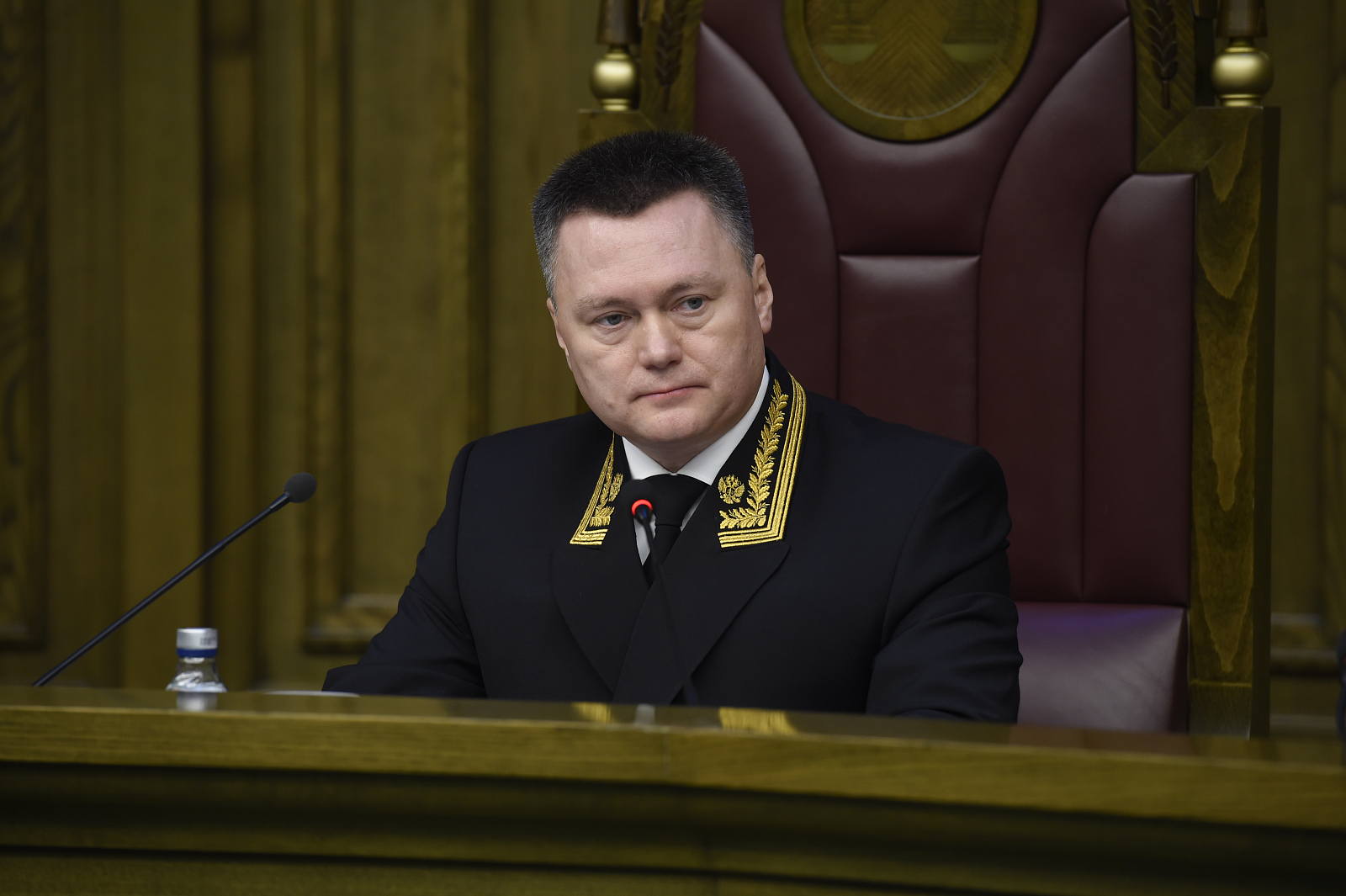
Addressing the meeting participants, Igor Krasnov noted that this year, the Plenum of the Supreme Court of the Russian Federation has demonstrated its effectiveness as an important instrument for protecting the interests of the state and society, as well as the rights and social guarantees of citizens.
According to Igor Krasnov, the adopted clarifications were aimed at eliminating divergent approaches in judicial practice, reducing the number of decisions being reviewed, and establishing clear and understandable algorithms for applying substantive and procedural law.
Separately, the Head of the Supreme Court noted that certain adjustments had been made to the Plenum's work to strengthen its role as a guarantor of the unity of the judicial system.
"I see the Plenum's task as laying the foundation for the sustainable development of the Russian justice system over the long term. Its activities should be strategic, not reactive. Therefore, we will continue to improve the quality and accessibility of the legal positions of the highest judicial authority, ensuring a balance between the stability of the law and its adaptation to new realities. The Plenum will focus on issues that truly concern our citizens and the legal community of our country", Igor Krasnov emphasized.
In response to legislative amendments and questions before the courts, the Plenum of the Supreme Court of the Russian Federation made several amendments to its resolution concerning the practice of sentencing. This included updating its position on circumstances mitigating and aggravating liability.
For example, the Plenum recalled that the court has the right to recognize the presence of minor children as a mitigating circumstance. This also applies to cases where the children were born after the crime was committed. However, the document clarifies that the presence of minor children cannot, in itself, be considered an absolute basis for mitigating the sentence. After all, the law links the possibility of making such a decision to the fulfillment of the parent's obligations to properly raise and financially support their children, provided, of course, that the crime was not committed against them. At the same time, if the court established the presence of minor children in the convicted person's family but did not recognize this as a mitigating circumstance and did not take this into account when sentencing, the reasons for this decision must be stated in the verdict.
Furthermore, in its ruling, the Plenum emphasized to the courts that a person's denial of guilt, lack of remorse, and the victim's opinion regarding the imposition of a severe sentence on the defendant are not considered by law to be aggravating circumstances, as defined in Article 63 of the Criminal Code of the Russian Federation. Therefore, the court should not refer to them in the verdict when sentencing.
The Plenum also clarified that correctional labor may only be imposed on foreigners and stateless persons who are entitled to work in Russia without a work permit or patent, in accordance with Federal Law No. 115 ("On the Legal Status of Foreign Citizens in the Russian Federation"). For example, correctional labor may be imposed on foreigners permanently or temporarily residing in the Russian Federation, since they are not subject to the labor regulations requiring a work permit or patent.
The Plenum drew the courts' attention to the fact that when imposing a sentence of forced labor, it is necessary to determine the offender's ability to work and other circumstances indicating their suitability for serving such a sentence. Furthermore, the resolution notes that criminal law does not prohibit the imposition of forced labor on foreign citizens and stateless persons.
As noted at the Plenum of the Supreme Court of the Russian Federation, a legal entity's conduct of economic activity involving entrepreneurial risk does not constitute grounds for holding persons controlling the debtor liable for the debtor's obligations. Persons controlling the debtor may be held liable only if the debtor's inability to satisfy existing claims is due to their conduct that did not meet the criteria of good faith and reasonableness, including if it is not related to market or other objective factors.
The Plenum of the Supreme Court of the Russian Federation also approved a number of other resolutions, taking into account previously received comments and suggestions. For example, a resolution clarifying certain aspects of the consideration of administrative offense cases related to fine evasion; a resolution establishing the uniform application of legislative provisions on the payment of state fees in civil, arbitration, and administrative court proceedings; and a resolution on the priority of satisfying the claims of controlling or affiliated persons of a debtor in bankruptcy cases.